
The modular home vs stick built decision is mainly a choice about where construction happens and how the project is coordinated. Modular construction shifts substantial work to a factory before delivery. Stick-built construction assembles the building primarily at the site. Either approach still needs an appropriate design, local review, competent installation, and a defined path to occupancy.
Choose between them by testing your site, design certainty, contractor availability, and finished-project scope. A lower building quote or a shorter factory schedule cannot establish the better outcome on its own. For US projects, first confirm that the proposed factory-built model can follow the required approval pathway; a catalog description does not demonstrate that acceptance.
Compare delivery methods for the same building
Create one room program before requesting competing proposals. State the intended use, occupancy, usable space, bathroom and kitchen requirements, finishes, performance criteria, and external works. Without that common brief, a modular quote for a compact supplied unit may be compared with a site-built quotation that includes foundations, services, and work outside the building.
Specify which items form the finished project. Identify foundations, delivery, lifting, local assembly, utility connections, testing, permits, and site restoration. Ask each bidder to mark included work, exclusions, and unresolved allowances. This makes differences visible without assuming that one construction method is inherently cheaper or that factory completion removes local labor.
For repeated units, define whether the designs are identical, mirrored, or individually configured. Repetition can make early design coordination useful, but it does not guarantee a saving. Site conditions, logistics, procurement quantities, and the eventual agreement still determine the outcome. Evaluate actual offers rather than applying a generic percentage advantage to the entire development.
Use site access as an early selection test
Modular delivery requires a feasible route for the actual shipment, not just ordinary access to the property. Review road constraints, turning areas, overhead obstacles, gates, gradients, and the final unloading location. The carrier and handling contractor need the load configuration and building information before confirming how placement can proceed.
Stick-built work brings materials, equipment, and trades to the site over a longer sequence. It may avoid one large delivery while creating other access and storage needs. Tight urban parcels, remote roads, or limited working areas can affect either approach differently. Compare a proposed logistics plan for each rather than treating access as a simple yes-or-no attribute.
Our site preparation guide explains the information needed to coordinate building interfaces and local works for a capsule project. The underlying questions about supports, route, handling, and services also help structure an early delivery review. Engineering and lifting decisions still require project-specific professional assessment.
Decide how early the design can be fixed
Factory production depends on coordinated decisions before the relevant work is manufactured. Bathroom locations, service entries, structural openings, and equipment selections can affect several disciplines at once. A late change may require revised documents, procurement, or completed-work alterations. Ask how changes are approved and priced at each stage instead of assuming customization remains equally easy throughout production.
Site-built construction can allow some decisions to develop later, but changes also disrupt trades, inspections, and material orders. The useful comparison is your actual decision process. If the owner, operator, and design team can agree on a repeatable layout early, a factory approach may fit. If major functional questions remain unresolved, clarify them before selecting either method.
At SunlitTec, our customization information helps organize discussions about layouts, finishes, and service interfaces. Availability is model-specific. A requested adjustment should be documented with its effect on the supply scope and technical review; an attractive concept drawing should not become an assumed production specification.
Build a schedule around dependencies
Modular home construction time includes more than factory work. Identify design completion, approvals, component procurement, manufacturing, shipment, site preparation, placement, service connections, and final acceptance. Some activities may overlap, but the opening date depends on the slowest unresolved dependency. A completed unit waiting for an unfinished site is not an operating building.
For a stick-built proposal, map the same endpoint through the local construction sequence. Ask about contractor availability, inspection stages, weather exposure, and delivery of important materials. Neither schedule should depend on unsupported assurances that delays are impossible. Request the assumptions, prerequisites, and party responsible for each significant milestone.
Compare how each team handles a disruption. If site works fall behind, where can the building or materials wait, and who pays for storage or remobilization? If a design revision is required, which activities pause? Discussing these scenarios before award gives the buyer a more useful schedule comparison than a headline construction duration.
Review quality through inspectable evidence
Modular home quality depends on the design, materials, fabrication, transport, installation, and maintenance of the actual building. Factory production changes the inspection environment, but it does not eliminate the need for applicable checks. Ask how concealed work is documented and what the destination reviewer requires before assemblies are closed.
For site-built construction, ask which stages the owner’s team and relevant inspectors will review. For modular work, add receiving condition, transport protection, module interfaces, and completion checks. In both cases, specify who records defects, approves corrective work, and signs off the final condition. Photographs and checklists should identify the actual building and revision.
Keep resale and insurance questions separate from construction quality claims. A lender, insurer, or appraiser may need specific information about classification, location, land ownership, and installation. Ask those parties directly about the proposed arrangement. A general claim that modular and traditional homes have identical market outcomes is not a project-specific assessment.
Turn the comparison into a procurement decision
Use our product directory to identify factory-built formats that might meet the room program. Capsule cabins, container-format buildings, and expandable products have different transport and assembly questions. They are not interchangeable quotations, and a product-family label does not establish US housing classification or approval for your intended occupancy.
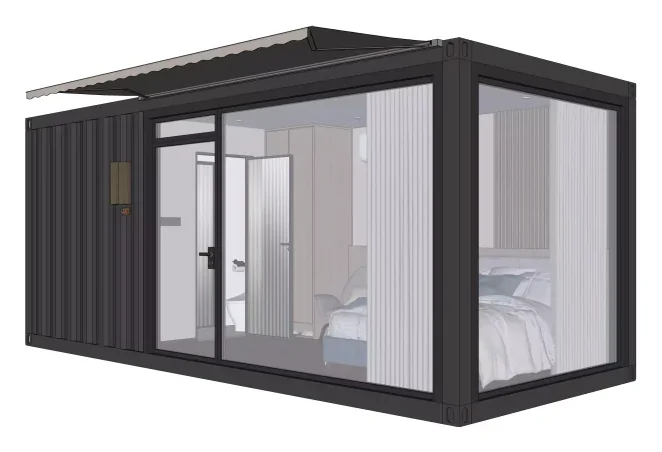
Ask for the selected model, drawing revision, completion level, equipment schedule, shipment arrangement, and exclusions. Then place those inputs beside the site-built proposal’s corresponding scope. Resolve missing figures with the responsible contractors before comparing totals. Where an item remains uncertain, identify the allowance and the decision that could change it.
Conclusion
The better delivery method is the one that fits the site, room program, approval route, and project team’s ability to coordinate decisions. Compare modular and stick-built construction at the same completed scope. Establish access, design deadlines, inspection evidence, and schedule dependencies before using price or duration to make the final choice.
Frequently asked questions
Are modular homes cheaper than stick built homes
That depends on comparable scope, site work, logistics, specifications, and local costs. Compare written proposals for the same completed project rather than base building prices.
Is modular construction faster
Some factory and site activities may overlap. The project schedule still depends on approvals, supply, transport, site readiness, connections, and required inspections.
Can modular layouts be changed later
Possibilities depend on the model and production stage. Ask about technical implications, revised drawings, cost, and schedule before approving a change.
Is site built construction better for restricted access
It may be worth evaluating, but material deliveries and working space still matter. Compare actual logistics proposals for the specific site.
Send the destination, room program, quantity, access information, and preferred format. We can use those inputs to clarify the product questions in your comparison. Discuss your project with our team.